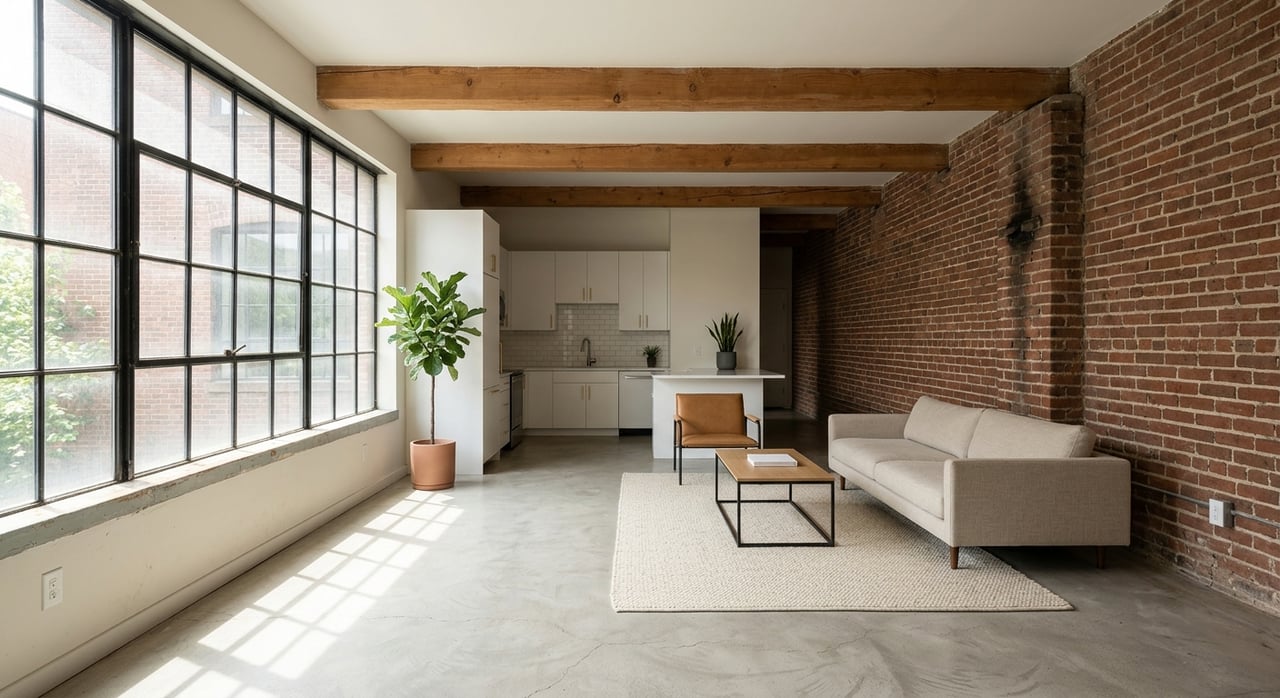
Ever wish you could find a home that feels distinctive without giving up day-to-day convenience? If you are drawn to historic character but still want a practical, low-maintenance lifestyle, Lowry stands out in a way few Denver neighborhoods do. Its loft-style homes are tied to real history, not just industrial-inspired design, and the neighborhood adds parks, shopping, transit access, and a strong sense of place. Let’s take a closer look.
Why Lowry lofts stand out
Lowry’s loft story starts with the neighborhood itself. After Lowry Air Force Base closed in 1994, Denver and Aurora approved a reuse plan, and the Lowry Redevelopment Authority transformed the former base into a mixed-use, master-planned community. According to DURA, the completed project includes about 4,500 homes, 800 acres of parks and open space, and a community where more than 25,000 people live, work, and go to school.
That bigger redevelopment story matters because it explains why loft living in Lowry feels authentic. Rather than building brand-new condos that mimic an industrial look, Lowry preserved and repurposed many former base buildings. The Lowry Foundation notes that more than 20 historic buildings were adapted for new uses, helping the neighborhood keep visible ties to its past.
Historic roots, modern homes
If you are comparing loft-style options around Denver, this is one of Lowry’s biggest advantages. The neighborhood’s best-known loft residences come from adaptive-reuse projects, which means the architecture and layout were shaped by real former military and utility buildings.
That gives many Lowry lofts a different personality than typical condo construction. You may find features tied to the original structure, such as high ceilings, large-scale brick exteriors, and a sense of architectural character that is hard to duplicate in a new build.
Grand Lowry Lofts
Grand Lowry Lofts is one of the clearest examples of this historic-meets-modern appeal. The Lowry Foundation identifies the former Brick Barracks and Headquarters building at 200 N. Rampart Way as the largest building at Lowry, later renovated into 261 loft units.
Many of those homes feature very high ceilings, and the building’s brick exterior and Spanish Baroque entry portico create a more historic civic feel than you might expect from a condo property. For buyers who want a home with visual presence and a strong backstory, that combination can be especially appealing.
Steam Plant Lofts
Steam Plant Lofts tells a similar story on a smaller scale. The former steam plant, known as Building 361, opened in 1940 and was converted in 2004 into 12 custom-designed loft-style condominiums plus two rooftop penthouses.
The project blended preservation with updated performance. The Lowry Foundation notes that the building incorporated six solar power systems, and the redevelopment earned Historic Denver’s Community Preservation Award in 2004 and the Mayor’s Design Award in 2009.
What loft-style living feels like in Lowry
Lowry offers a lifestyle that feels urban in some ways, but not as dense as downtown. That is part of the appeal if you want walkability and convenience without the pace or scale of the city core.
The neighborhood’s planning documents emphasize Traditional Neighborhood Design principles, including walkability, street engagement, and close proximity between housing, offices, retail, and amenities. In everyday terms, that means Lowry was designed to support a more connected routine.
Walkable daily convenience
Lowry’s Town Center helps bring that plan to life. The neighborhood describes it as a compact retail area with grocery shopping, boutiques, and other stores arranged for easy access.
For you as a buyer, that can mean shorter errands and a more practical daily rhythm. Instead of driving across several parts of town for basic needs, many amenities are built into the neighborhood experience.
Transit access that supports flexibility
Transit may also matter if you want options for commuting or getting around Denver. Lowry’s neighborhood site notes that the area includes multiple bus stops with service from routes 6, 73, and 10, and current RTD route maps show route 6 serving the Lowry Boulevard area and route 73 serving the Quebec and Lowry corridor.
That does not make Lowry feel like a transit hub in the downtown sense, but it does add flexibility. If you value a location that supports both driving and public transportation, that balance can be useful.
Parks and recreation nearby
Another part of Lowry’s appeal is how much open space is built into the neighborhood. Official neighborhood information describes more than 800 acres of parks and open space, along with playgrounds, amphitheaters, a golf course, an ice arena, a recreation center and pool, a dog park, sports fields, and hiking and biking trails.
That broad mix helps balance the loft lifestyle. You can enjoy a home with a more urban design feel while still having easy access to outdoor areas and recreation close to home.
Lowry’s character goes beyond the lofts
Even if you do not end up in one of the best-known loft buildings, Lowry’s historic identity still shapes the neighborhood. The area’s former hangars were repurposed for the Wings Over the Rockies Air & Space Museum and Big Bear Ice Arena, while other historic buildings found new life as schools, offices, and community spaces.
That reuse pattern adds depth to the neighborhood experience. It is not just one standout building surrounded by unrelated development. Instead, the larger community reflects a consistent mix of preservation and new use.
Art and landmarks add identity
The Lowry Foundation also maintains 13 pieces of public art in the neighborhood, including RTD art shelters and the Reading Garden. These details help create a sense of place that feels intentional rather than generic.
For buyers, that can make a real difference. When a neighborhood has visible landmarks, preserved architecture, and public spaces with personality, it often feels easier to connect with over time.
Who may be drawn to loft-style homes in Lowry
Lowry lofts can appeal to several kinds of buyers. If you are an early-stage buyer exploring condo or loft options, Lowry gives you a combination of historic character, lower-maintenance living, nearby amenities, and a neighborhood with a strong built-in identity.
It can also appeal if you like city-style design but want a calmer setting. Lowry offers shopping, dining, public transportation, and community amenities, yet its tree-lined boulevards, residential streets, and open-space network create a different feel than central downtown neighborhoods.
What to watch for when you compare options
If you are seriously considering a loft in Lowry, it helps to compare more than finishes alone. In a neighborhood shaped by adaptive reuse, the building itself is a major part of the value story.
As you evaluate options, pay attention to:
- The original building history and how it was repurposed
- Ceiling height and overall sense of volume
- Exterior architecture and preserved historic details
- Proximity to Town Center, parks, and transit stops
- Whether you want a more intimate building or a larger loft community
These details can shape your day-to-day experience just as much as square footage or updated interiors. In loft-style living, the setting and structure often matter as much as the unit itself.
Why Lowry continues to attract attention
Lowry’s redevelopment created a neighborhood that blends history, convenience, and livability in a very specific way. Its loft-style homes stand out because they are rooted in authentic adaptive reuse, while the surrounding community adds practical benefits that many buyers want, including walkability, recreation, shopping, and transit access.
If you are searching for a home that feels distinctive without feeling disconnected from modern needs, Lowry is worth a serious look. And if you want help comparing loft-style homes, condos, or other neighborhood options across Denver, Debbie Jacobs can help you narrow the choices and find the right fit.
FAQs
What makes loft-style homes in Lowry different from other Denver lofts?
- Lowry’s best-known lofts are adaptive-reuse homes created from former military and utility buildings, including Grand Lowry Lofts and Steam Plant Lofts, rather than new buildings designed to look industrial.
What is the history behind Lowry in Denver?
- Lowry was redeveloped after Lowry Air Force Base closed in 1994, and the former base was transformed into a mixed-use community with homes, parks, offices, retail, and preserved historic buildings.
What amenities are near loft-style homes in Lowry?
- Lowry offers access to Town Center shopping, parks and open space, playgrounds, trails, a golf course, an ice arena, a recreation center and pool, sports fields, and other neighborhood amenities.
What transit options are available in Lowry?
- Lowry has multiple bus stops, with neighborhood information noting service from routes 6, 73, and 10, and RTD maps showing route 6 along Lowry Boulevard and route 73 near Quebec and Lowry.
Is Lowry more urban or suburban in feel?
- Lowry is best described as urban-feeling but not downtown-dense, with walkable mixed-use planning, neighborhood retail, and major open-space amenities.
Who should consider buying a loft-style home in Lowry?
- Buyers who want historic character, condo-style maintenance, nearby amenities, and a neighborhood with both architectural identity and practical everyday convenience may find Lowry especially appealing.