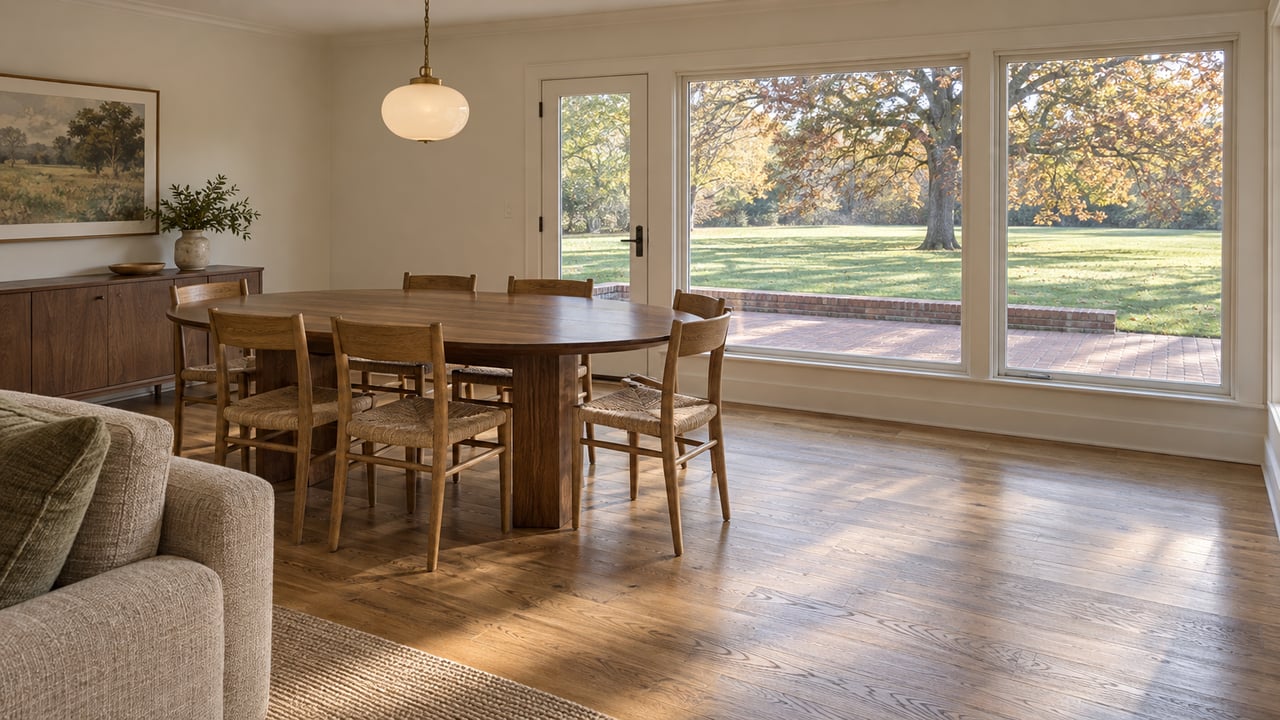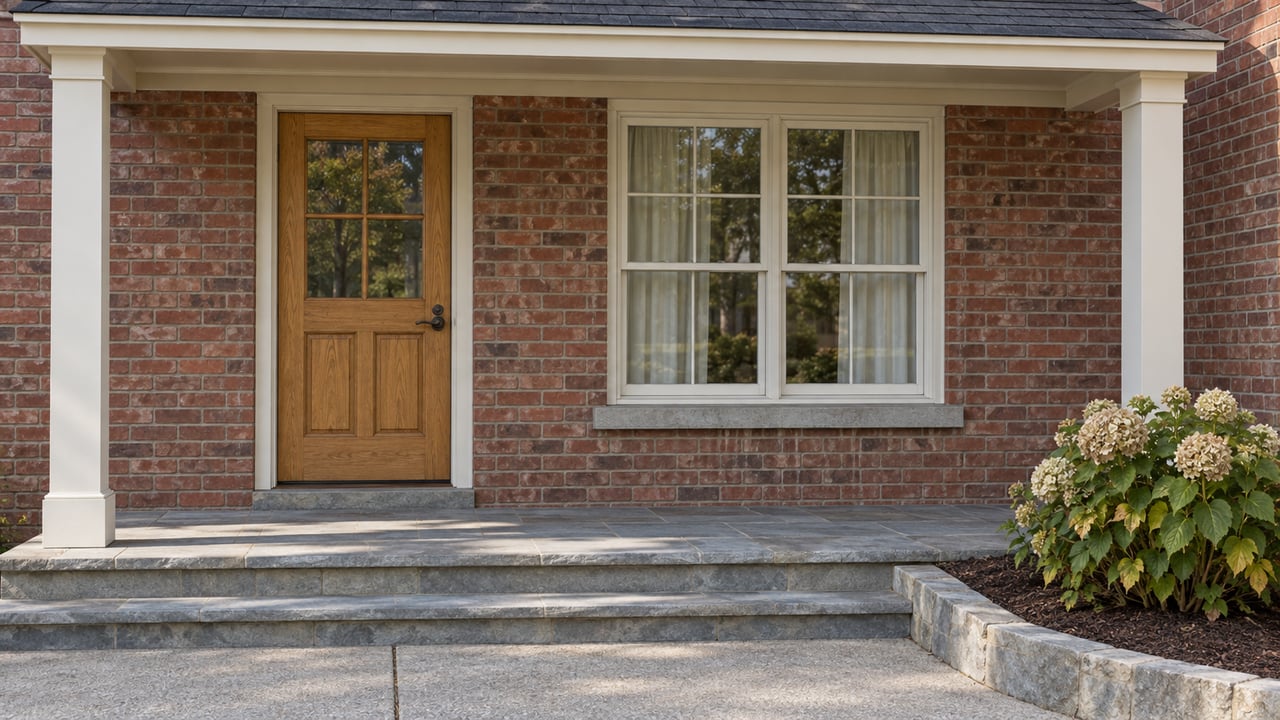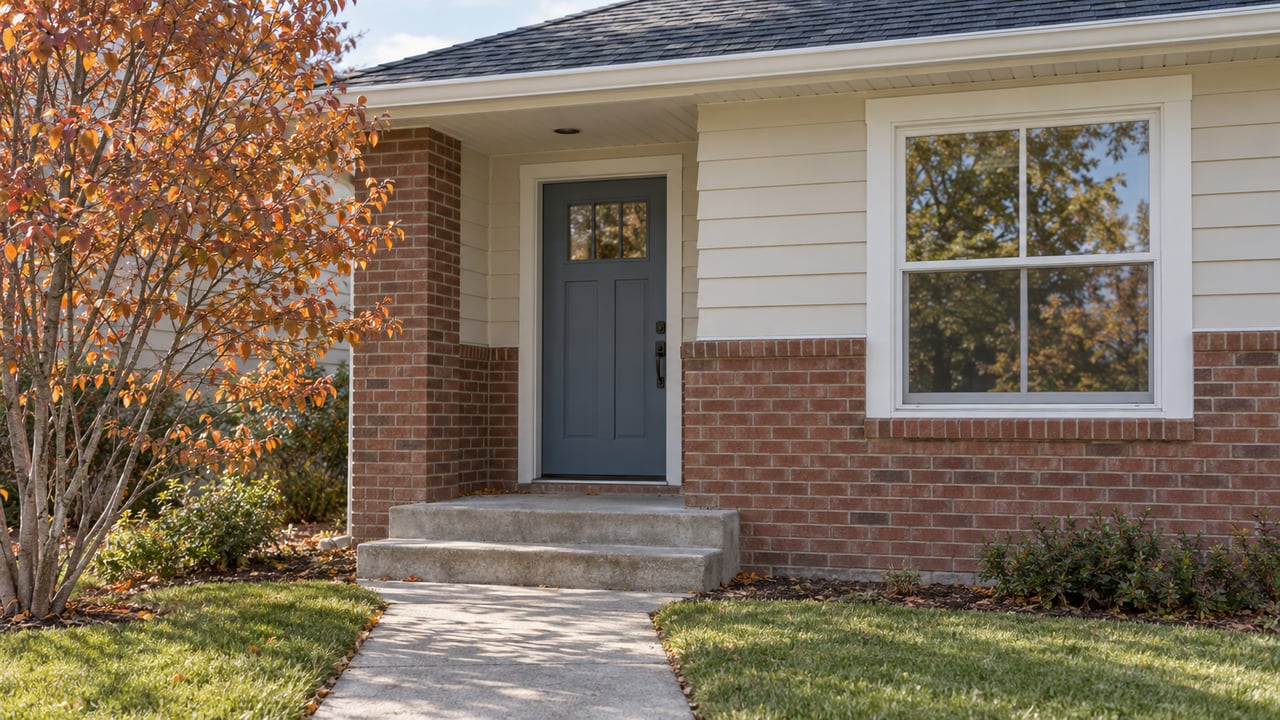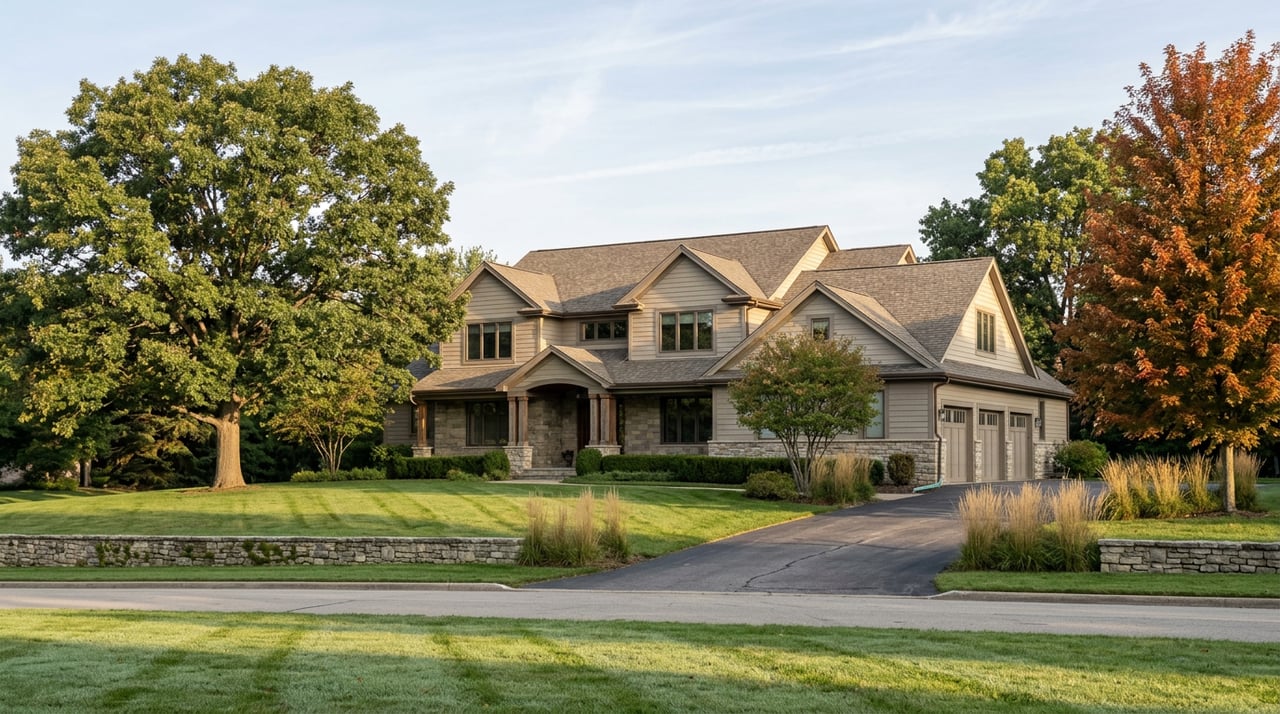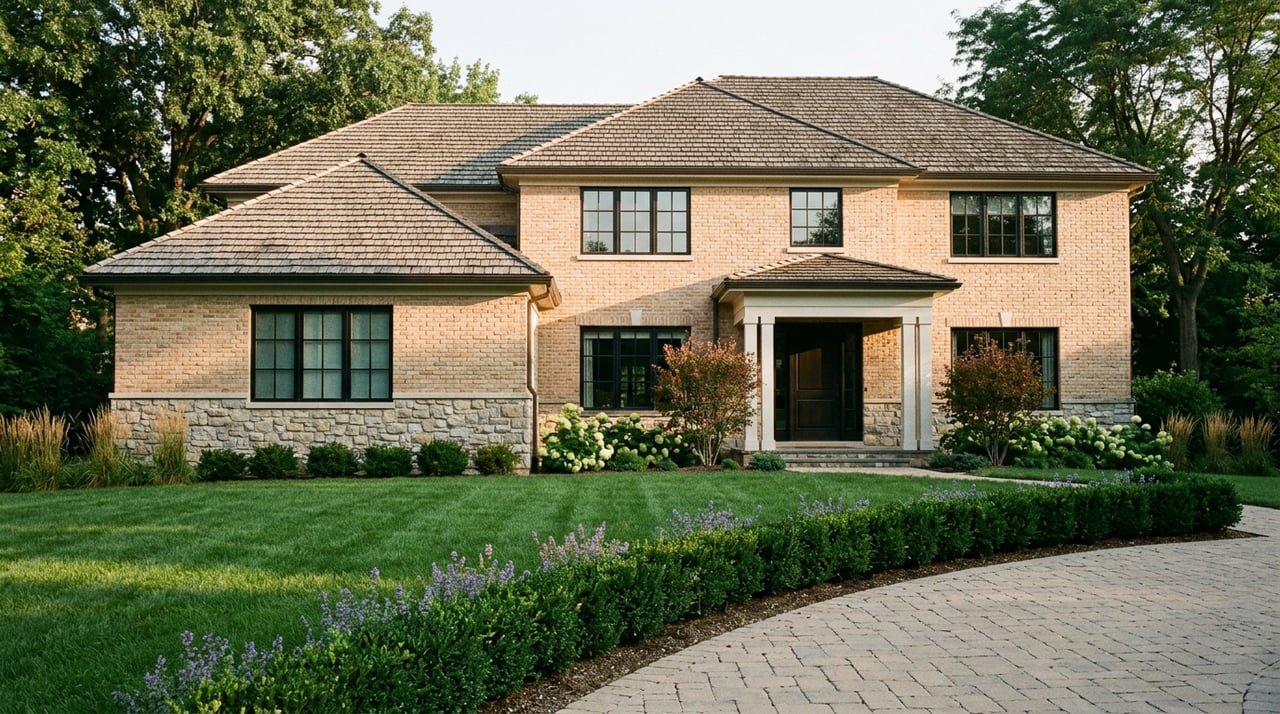
A four bedroom home on E Fair Place closed in March 2026 for $1,569,950. At 4,178 square feet, that works out to roughly $376 a square foot. A few miles away and about a year earlier, a five bedroom home on S Billings Way sold for $1,350,000 at 4,227 square feet, or about $319 a square foot. Both sales sit inside Valley Country Club Estates, the gated community built around the private club in Centennial.
Here's the part that doesn't add up if you're comparing neighborhoods off a portal search. Redfin had Centennial's citywide median price per square foot at $266 earlier in 2026. Even the lower of those two comps runs 20 percent above that figure, and the higher one is closer to 41 percent above it. That gap has had no reason to close since. Zillow's broader home-value index for Centennial kept sliding through July 2026, down 1.8 percent year over year, so if the citywide per-square-foot rate moved at all after that February reading, it moved down, not up. Square footage doesn't explain the premium inside the gates. Lot size doesn't fully explain it either, since plenty of Centennial homes sit on comparable acreage for far less. Something else is priced into these sales, and it isn't showing up as a line item anywhere in the listing.
Two Sales, One Pattern
Lay the two transactions side by side and the gap becomes the story, not a footnote to it.
| Property | Sale Date | Price | Square Feet | Price/Sq Ft |
|---|---|---|---|---|
| 14022 E Fair Pl | March 2026 | $1,569,950 | 4,178 | ~$376 |
| 6271 S Billings Way | May 2025 | $1,350,000 | 4,227 | ~$319 |
Two sales aren't a trend line, but they line up with what the citywide numbers suggest: homes inside the gates trade at a premium over the rest of Centennial, and nothing in the broader data points to that premium shrinking. Centennial's average home value sat at $641,069 as of July 2026, down 1.8 percent from a year earlier. Both comps above sold for more than double that citywide figure.
The obvious explanation is exclusivity. Gated communities almost always carry some premium. But that explanation has been true for decades in this neighborhood, and it doesn't account for why the per-square-foot rate is running as high as it is right now rather than holding at whatever baseline premium existed before. Recent changes to the club's amenities may be relevant context, but these comparisons alone do not show their effect on prices.
The Club's Recent Reinvestment Offers Context
Valley Country Club opened in 1956. For most of its history it looked, from a real estate standpoint, like a stable but static asset sitting at the center of the neighborhood: a golf course, a clubhouse, the kind of amenity that adds a baseline premium to nearby addresses without moving much year to year.
That changed starting around 2022, when the club began a five-pool aquatics project that took more than two years to complete. The report says the finished complex includes a lap pool, an adult pool, a gradual-entry pool, a diving well and a slide pool, and it opened early in the summer of 2024 after what the outlet described as a convoluted construction process. Alongside it, the club built a new restaurant building called The Pavilion and an adjoining fitness complex. At the same time, the club signed with Troon Privé, the private-club operating arm of Troon, to run day-to-day operations, agronomy, food and beverage, and membership sales and marketing.
In Colorado AvidGolfer, Valley Country Club general manager Al Jader described the finished amenity area this way:
"It's a really good-looking area, very resort-like."
For anyone comparing neighborhoods on price alone, the club's recent work is part of the context. A buyer closing on E Fair Place in March 2026 was buying proximity to a club two years into a professionally managed reinvestment cycle, with new dining, new aquatics, and a national management brand attached to its operations. None of that shows up in a square footage calculation. These amenities may matter to buyers, but the two sales alone do not show how much they influenced prices.
A Neighborhood Too Small to Have Real Comps
There's a second reason citywide numbers can't explain what happens inside these gates, and it has nothing to do with the club's recent construction. Valley Country Club Estates is built out at roughly 80 homes on quarter to third acre lots. That is not a typo, and it is not a rounding artifact of a small sample search. It is the entire neighborhood.
A subdivision that size does not generate enough annual turnover to produce a real comp set in the statistical sense. Centennial as a whole sold 97 homes in February 2026 alone. Valley Country Club Estates might see two or three sales in a comparable stretch. When a market has that few transactions, each sale isn't really being priced against a curve of similar recent closings the way a production-built subdivision is. It's being priced against whatever the buyer and seller privately believe the club, the gate and the position on the course are worth at that specific moment, so buyers and sellers may consider the aquatics complex and management contract, though the figures here do not show how much they affect prices. There's no large denominator to absorb the story. Every sale is the story.
What Position Actually Costs
None of this means every home inside the gates is priced the same. Local listings routinely describe specific homes by their position on the course, a home backing to the 17th fairway, another set on the 6th green, and that positioning is marketed as a distinguishing feature in its own right. The two sales do not establish how much the club's reinvestment or course position affects prices, but course frontage may be one factor buyers consider when comparing homes within the neighborhood. A buyer comparing two listings at similar square footage can weigh direct course frontage as a distinguishing feature without assuming a specific markup.
There's a friction point worth flagging before anyone gets deep into a purchase here. The neighborhood HOA, Valley Country Club Estates HOA Inc., handles common-area grounds maintenance, recycling and trash removal. That is a separate line item from anything at the club itself. Access to the golf course, the new pools and The Pavilion runs through the club's own membership structure, now under Troon Privé's management. Whether a specific home's price assumes club access, and what that access would cost on top of the home and the HOA dues, is homework worth doing with the club directly before writing an offer, not after closing.
For a buyer weighing Valley Country Club Estates against another Centennial-area pocket, the practical takeaway isn't that the neighborhood is overpriced relative to its square footage. It's that these two sales were above Centennial's benchmarks, while the club's amenities and the subdivision's small size offer context a median-price chart cannot capture.
FAQ
Does buying a home in Valley Country Club Estates include club membership? Membership terms are set by the club, not the neighborhood HOA, so this varies by listing and should be confirmed directly with Valley Country Club before writing an offer.
What does the neighborhood HOA actually cover? The Valley Country Club Estates HOA handles common-area grounds maintenance, recycling and trash removal. Golf, pool and dining access are club amenities, run separately under the club's own membership structure.
Are golf-course-facing homes priced differently than interior lots? Local listings consistently market specific homes by their fairway or green frontage, which suggests position within the neighborhood carries its own premium beyond square footage and lot size alone.
If you're comparing Valley Country Club Estates against other south-central Denver neighborhoods and want to know what a specific listing's premium is actually buying, Debbie Jacobs, Selling Denver can walk through the comps, the HOA structure, and the club's membership setup before you write an offer. Book an appointment to get the full picture before the next sale sets the next comp.
This article is general information, not legal, tax or financial advice. Consult a qualified professional about your situation.